Jukseoru Pavilion (삼척 죽서루)
Gangwon · 37 Jukseoru-gil, Samcheok-si, Gangwon-do
Hours
March-October: 09:00-18:00November-February: 09:00-17:00 * Last admission: 30min before closing.
March-October: 09:00-18:00November-February: 09:00-17:00 * Last admission: 30min before closing.
Address
37 Jukseoru-gil, Samcheok-si, Gangwon-do
37 Jukseoru-gil, Samcheok-si, Gangwon-do
Parking
Available
Available
Overview
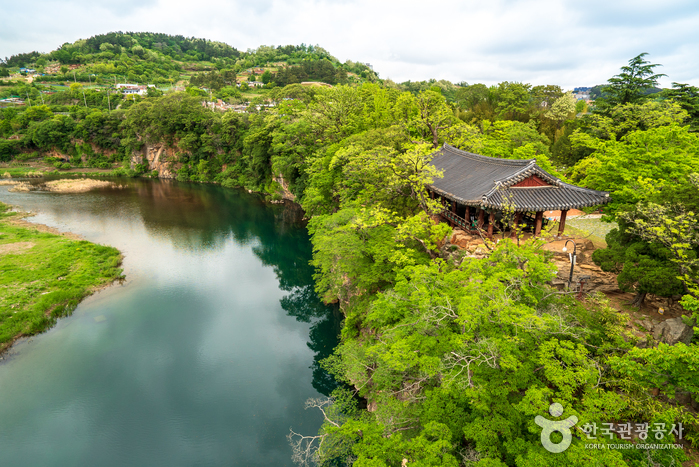
Jukseoru Pavilion, estimated to have been built around 1266, is one of the eight major attractions of Gwandong District in middle eastern Korea collectively known as Gwandong Palgyeong (eight famous sites). Sitting on the edge of a cliff overlooking Osipcheon Stream, the pavilion incorporates the rocks on the cliff as cornerstones, with a five-girder paljak (ancient-style roof).<br><br>
Then, there are 26 signboards hanging from the rafters of the pavilion. The signboards contain inscriptions of famous ancient scholars such as 'Jeilgyeongjeong' ('The best riverside pavilion'; 1662) by Heo Mok, 'Jukseoru' and 'Gwandong Jeilru' ('The best pavilion in Gwandong'; 1711) by Yi Seong-jo, and 'Haeseon Yuhui Jiso' ('The place that marine gods enjoy'; 1837) by Yi Gyu-heon. Others who have left their mark include King Sukjong (1674-1720), King Jeongjo (1776-1800) and Yulgok YiYi (1536-1584). Evidently, Jukseoru Pavilion has served as an inspiration since its establishment, and continues to inspire visitors today through the stunning view of its surrounding nature.
Then, there are 26 signboards hanging from the rafters of the pavilion. The signboards contain inscriptions of famous ancient scholars such as 'Jeilgyeongjeong' ('The best riverside pavilion'; 1662) by Heo Mok, 'Jukseoru' and 'Gwandong Jeilru' ('The best pavilion in Gwandong'; 1711) by Yi Seong-jo, and 'Haeseon Yuhui Jiso' ('The place that marine gods enjoy'; 1837) by Yi Gyu-heon. Others who have left their mark include King Sukjong (1674-1720), King Jeongjo (1776-1800) and Yulgok YiYi (1536-1584). Evidently, Jukseoru Pavilion has served as an inspiration since its establishment, and continues to inspire visitors today through the stunning view of its surrounding nature.
Location
📍 Open in Google MapsHow to Get There
Info: +82-33-570-3670
Best Time to Visit
South Korea has four distinct seasons. Spring (March–May) and autumn (September–November) are the most popular times to visit. Summer brings humidity and occasional typhoons, while winter is cold but great for ski resorts and festivals.
Frequently Asked Questions
March-October: 09:00-18:00November-February: 09:00-17:00 * Last admission: 30min before closing.
Available
N/A (Open all year round)
+82-33-570-3670