Jangyu Daecheonggyegok Valley (장유대청계곡)
Gyeongnam · Wolsan-ro, Gimhae-si, Gyeongsangnam-do
Address
Wolsan-ro, Gimhae-si, Gyeongsangnam-do
Wolsan-ro, Gimhae-si, Gyeongsangnam-do
Parking
Not available
Not available
Overview
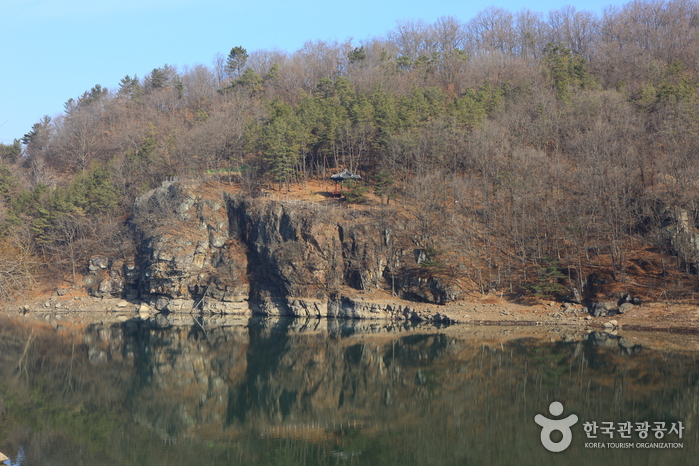
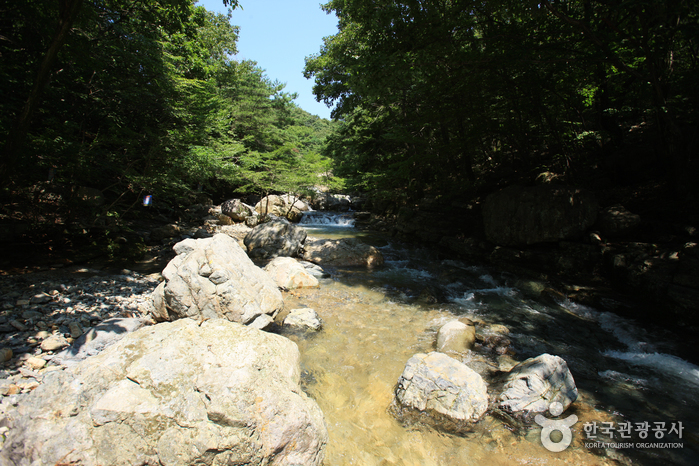
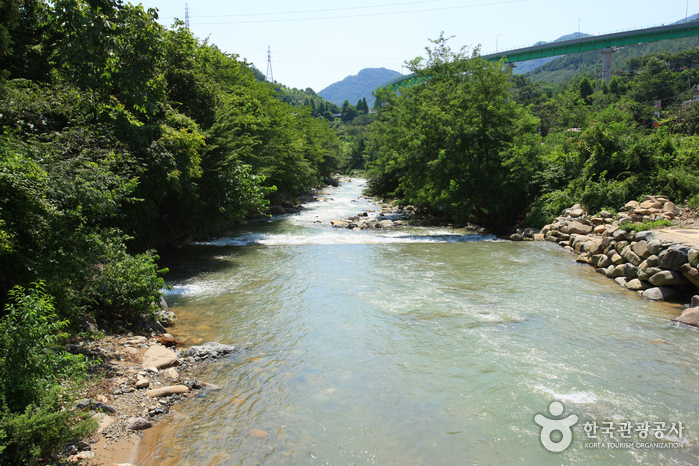
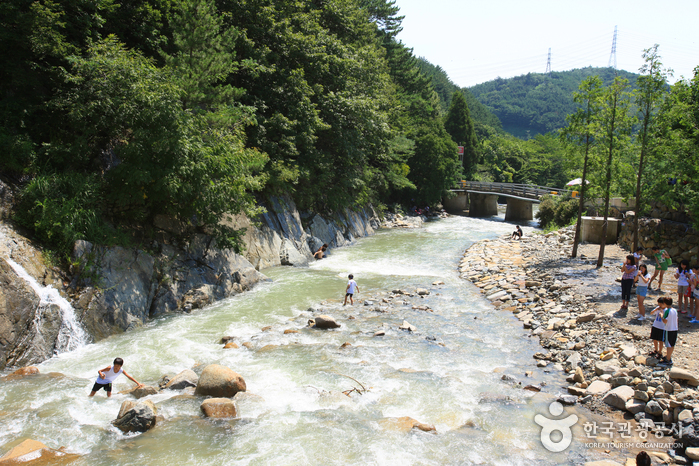
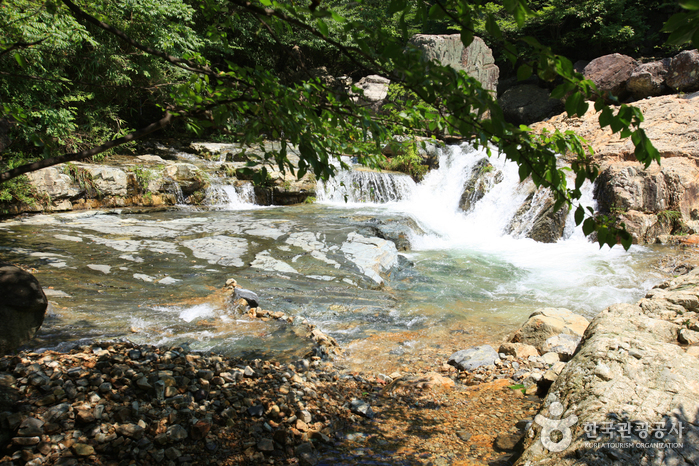
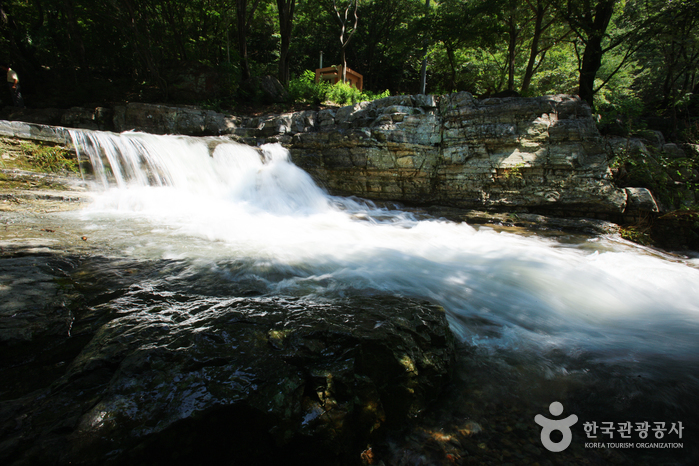
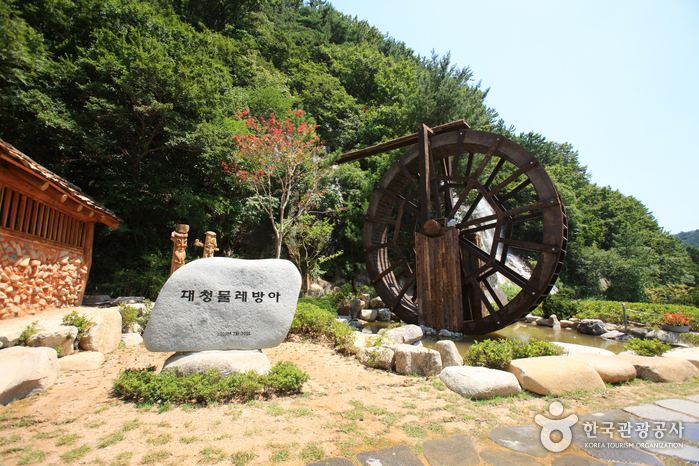
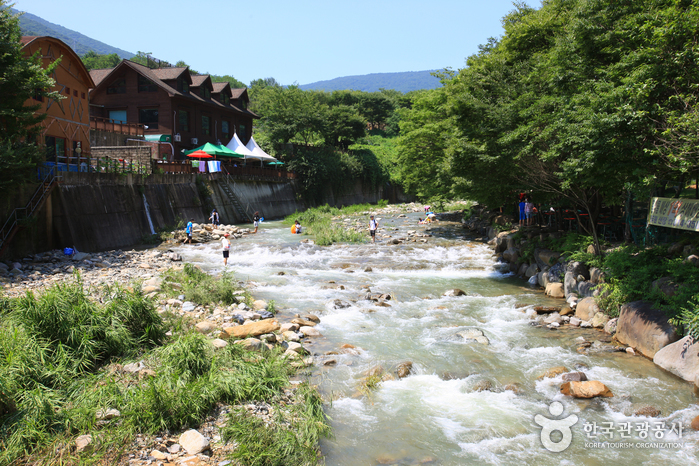
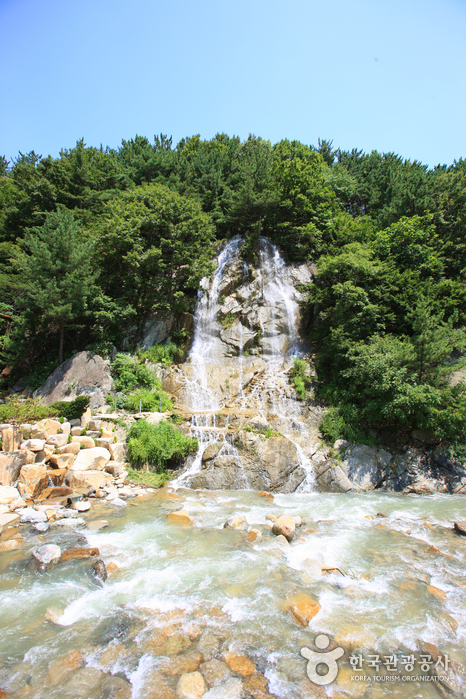
The 6-kilometer-long Jangyu Daecheonggyegok Valley is located at the foot of Bulmosan Mountain, where the water flowing into the valley divides into two principal streams. Lush trees and clean water make up the area’s beautiful natural landscape. A 30-minute hike along the valley will take hikers to Jangyuam Hermitage where they will find the stupa of Jangyuhwasang, who is said to have spread Buddhism for the first time in Korea.
<br><br>
Visitors flock to Jangyu Daecheonggyegok Valley not only to enjoy the scenery, but also to taste the delicious duck, chicken, and baeksuk (chicken soup with rice) dishes sold around the area. In 1984, the valley was integrated into Jangyupokpo Recreational Park where bridges were built and water supply facilities were placed at two locations. Sangjeolgyo Bridge at the entrance to the valley is 30 meters, while Bonpogyo Bridge is 4 meters. A 1,720 meter-long forest trail was also created. The rugged mountain terrain offers a challenging, yet highly interesting climb up the mountain.
<br><br>
Visitors flock to Jangyu Daecheonggyegok Valley not only to enjoy the scenery, but also to taste the delicious duck, chicken, and baeksuk (chicken soup with rice) dishes sold around the area. In 1984, the valley was integrated into Jangyupokpo Recreational Park where bridges were built and water supply facilities were placed at two locations. Sangjeolgyo Bridge at the entrance to the valley is 30 meters, while Bonpogyo Bridge is 4 meters. A 1,720 meter-long forest trail was also created. The rugged mountain terrain offers a challenging, yet highly interesting climb up the mountain.
Location
📍 Open in Google MapsHow to Get There
Info: • 1330 Travel Hotline: +82-2-1330 (Korean, English, Japanese, Chinese) • For more info: +82-55-350-1931
Best Time to Visit
South Korea has four distinct seasons. Spring (March–May) and autumn (September–November) are the most popular times to visit. Summer brings humidity and occasional typhoons, while winter is cold but great for ski resorts and festivals.
Frequently Asked Questions
Not available
• 1330 Travel Hotline: +82-2-1330 (Korean, English, Japanese, Chinese) • For more info: +82-55-350-1931
Photos



© Korea Tourism Organization · Source required · No modifications