Byeokgolje Reservoir Site (김제 벽골제)
Jeonbuk · 442 Byeokgolje-ro, Buryang-myeon, Gimje-si, Jeonbuk-do
Hours
March-October 09:00-18:00 / November-February 09:00-17:00 (Last ticketing 1 hour before closing time)
March-October 09:00-18:00 / November-February 09:00-17:00 (Last ticketing 1 hour before closing time)
Address
442 Byeokgolje-ro, Buryang-myeon, Gimje-si, Jeonbuk-do
442 Byeokgolje-ro, Buryang-myeon, Gimje-si, Jeonbuk-do
Parking
Available
Available
Overview
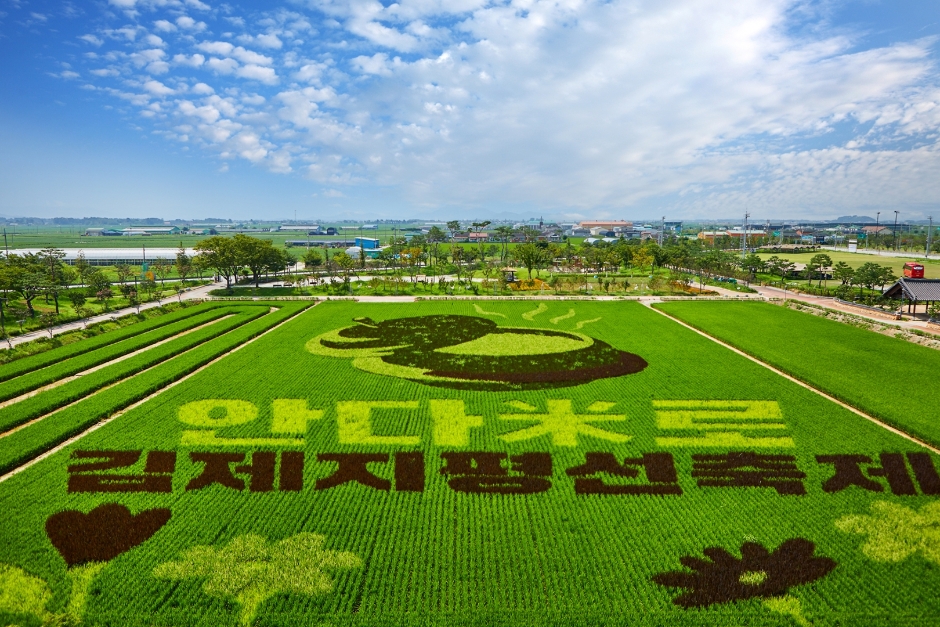
Byeokgolje Reservoir Site is home to the embankment and stele recording reconstruction for Korea’s first ever reservoir. Records show it was rebuilt in the 6th year of King Wonseong of Silla (790), the 21st year of King Hyeonjong and King Injong of Goryeo (1143), and then again in the 15th year of King Taejong of Joseon (1415). It was lost due to heavy rain in 1420 (the 2nd year of King Sejong's reign).
Currently, only about 3 kilometers of straight embankment remains on the site. In 1925, the Dongjin Land Improvement Association remodeled this embankment and used it as a channel for providing water for farming, thus losing a lot of its original appearance. A monument was erected on the north side of the embankment to commemorate the rebuilding of Byeokgolje Reservoir during the Joseon Dynasty. However, it is difficult to read the writing because it is worn out.
In 1975, two sites with water gates that controlled the water in the reservoir were excavated, and the results showed that the construction used large-scale, high-level engineering technology. Byeokgolje Reservoir is not only significant in that it was Korea's first reservoir but also proves that the country’s civil engineering technology was developed enough to build such a reservoir at the time, revealing a groundbreaking fact in the history of science and technology in Korea.
Nearby tourist attractions can be visited together: Byeokgolje Agricultural Museum, where you can get a glimpse of the old agricultural culture, Theme and Experience Space for Agriculture, and Byeokcheon Art Gallery, which displays the works of Na Sang-mok, an Oriental Painting artist in Korea.
* Pets are allowed; however, a leash is required.
Currently, only about 3 kilometers of straight embankment remains on the site. In 1925, the Dongjin Land Improvement Association remodeled this embankment and used it as a channel for providing water for farming, thus losing a lot of its original appearance. A monument was erected on the north side of the embankment to commemorate the rebuilding of Byeokgolje Reservoir during the Joseon Dynasty. However, it is difficult to read the writing because it is worn out.
In 1975, two sites with water gates that controlled the water in the reservoir were excavated, and the results showed that the construction used large-scale, high-level engineering technology. Byeokgolje Reservoir is not only significant in that it was Korea's first reservoir but also proves that the country’s civil engineering technology was developed enough to build such a reservoir at the time, revealing a groundbreaking fact in the history of science and technology in Korea.
Nearby tourist attractions can be visited together: Byeokgolje Agricultural Museum, where you can get a glimpse of the old agricultural culture, Theme and Experience Space for Agriculture, and Byeokcheon Art Gallery, which displays the works of Na Sang-mok, an Oriental Painting artist in Korea.
* Pets are allowed; however, a leash is required.
Location
📍 Open in Google MapsHow to Get There
Info: • 1330 Travel Hotline: +82-2-1330 (Korean, English, Japanese, Chinese) • For more info: +82-63-540-4094
Best Time to Visit
South Korea has four distinct seasons. Spring (March–May) and autumn (September–November) are the most popular times to visit. Summer brings humidity and occasional typhoons, while winter is cold but great for ski resorts and festivals.
Frequently Asked Questions
March-October 09:00-18:00 / November-February 09:00-17:00 (Last ticketing 1 hour before closing time)
Available
January 1, Mondays
• 1330 Travel Hotline: +82-2-1330 (Korean, English, Japanese, Chinese)
• For more info: +82-63-540-4094
• For more info: +82-63-540-4094
Photos


© Korea Tourism Organization · Source required