Geumma Reservoir (금마저수지)
Jeonbuk · Donggodo-ri, Geumma-myeon, Iksan-si, Jeonbuk-do
Address
Donggodo-ri, Geumma-myeon, Iksan-si, Jeonbuk-do
Donggodo-ri, Geumma-myeon, Iksan-si, Jeonbuk-do
Overview
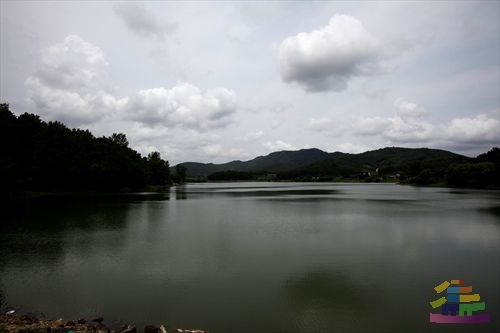
Looking towards the south from the top of Mireuksan Mountain, one can see Geumma Reservoir. The reservoir is shaped like the Korean peninsula. Hence it is also referred to as Jido Yeonmot, or Map Pond. The terrain is especially beautiful when viewing it through the fog in the early mornings. <br><br>
The water comes from Mireuksan Mountain, ensuring a steady supply of water throughout the year. There are no factories or other contaminants nearby so the water quality is of the highest grade. Near the reservoir, one can find <a href="http://english.visitkorea.or.kr/enu/SI/SI_EN_3_1_1_1.jsp?cid=1607539&nearBy=site&"><font color="navy">Seodong Park</font></a> and Mahan Hall. Seodong Park is a sculpture park displaying various sculptures such as a bronze statue of Baekje’s King Muwang of Baekje and a statue of Seodong’s Princess Seonhwa. Mahan Hall showcases the lifestyle and culture of Mahan, a tribal confederation during the Samhan period. The park also features various facilities such as an observatory, fishing spot and a promenade.
The water comes from Mireuksan Mountain, ensuring a steady supply of water throughout the year. There are no factories or other contaminants nearby so the water quality is of the highest grade. Near the reservoir, one can find <a href="http://english.visitkorea.or.kr/enu/SI/SI_EN_3_1_1_1.jsp?cid=1607539&nearBy=site&"><font color="navy">Seodong Park</font></a> and Mahan Hall. Seodong Park is a sculpture park displaying various sculptures such as a bronze statue of Baekje’s King Muwang of Baekje and a statue of Seodong’s Princess Seonhwa. Mahan Hall showcases the lifestyle and culture of Mahan, a tribal confederation during the Samhan period. The park also features various facilities such as an observatory, fishing spot and a promenade.
Location
📍 Open in Google MapsHow to Get There
Info: • 1330 Travel Hotline: +82-2-1330 (Korean, English, Japanese, Chinese) • For more info: +82-63-859-3818
Best Time to Visit
South Korea has four distinct seasons. Spring (March–May) and autumn (September–November) are the most popular times to visit. Summer brings humidity and occasional typhoons, while winter is cold but great for ski resorts and festivals.
Frequently Asked Questions
• 1330 Travel Hotline: +82-2-1330 (Korean, English, Japanese, Chinese)
• For more info: +82-63-859-3818
• For more info: +82-63-859-3818