![Daeheungsa Temple [UNESCO World Heritage] (대흥사[유네스코 세계문화유산])](https://tong.visitkorea.or.kr/cms/resource/61/3526461_image2_1.jpg)
Daeheungsa Temple [UNESCO World Heritage] (대흥사[유네스코 세계문화유산])
Korea · 400, Daeheungsa-gil, Samsan-myeon, Haenam-gun, Jeonnam-Gwangju Special Metropolitan City
Hours
Inquiries by phone
Inquiries by phone
Address
400, Daeheungsa-gil, Samsan-myeon, Haenam-gun, Jeonnam-Gwangju Special Metropolitan City
400, Daeheungsa-gil, Samsan-myeon, Haenam-gun, Jeonnam-Gwangju Special Metropolitan City
Parking
Available
Available
Overview
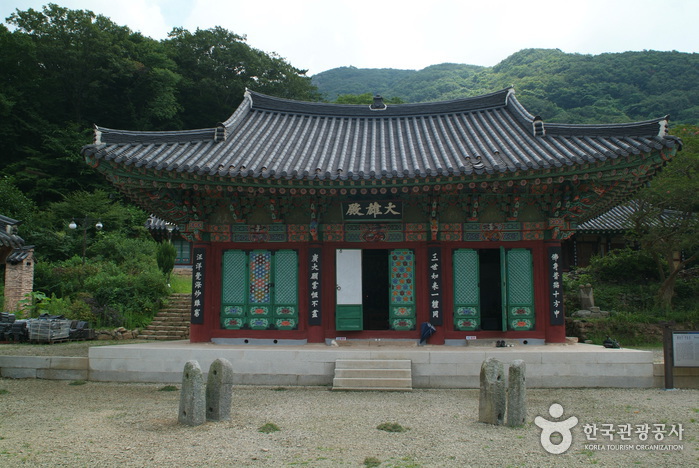
Daeheungsa Temple, located on Duryunsan Mountain, is said to have been founded by Monk Ado in the 22nd year of King Seong of Baekje. In 2018, it was inscribed on the UNESCO’s World Heritage List as part of the “Sansa, Buddhist Mountain Monasteries in Korea.” Also known as a temple where the spirit of Buddhism for national protection remains alive, Daeheungsa Temple served as the main base for monk soldiers led by Seosan Daesa during the Japanese invasions of Korea. Later, Seon Master Choui, who believed that the truth of the Buddha and the joy of meditation could be found in tea, built Iljiam Hermitage in the valley of Daeheungsa Temple. There, he devoted himself to solitary practice for more than 40 years, earning the temple recognition as a sacred site of Korea’s tea culture. Situated in a wide mountain basin, Daeheungsa Temple displays a unique layout. Geumdangcheon Stream runs through the grounds, dividing the buildings into North and South Precincts. Unlike standard temple layouts, these buildings are arranged freely, creating a distinctive spatial composition. Set farther back behind the South Precinct are the Pyochungsa Shrine, dedicated to Seosan Daesa, and Daegwangmyeonjeon Hall within Donggukseonwon Temple. Among the treasures of the temple is the Rock‑carved Seated Buddha at Bungmireugam Hermitage, designated as a National Treasure. Seosan Daesa Relics Hall houses 24 cultural artifacts, including royal gifts from King Seonjo, such as a jade alms bowl and a jadeite (green jade) alms bowl, along with Seosan Daesa’s calligraphy, sedan chair, shoes, and Buddhist scriptures written in gold and silver.
Location
📍 Open in Google MapsHow to Get There
Info: • 1330 Travel Hotline: +82-2-1330 (Korean, English, Japanese, Chinese) • For more info: +82-61-534-5502
Best Time to Visit
South Korea has four distinct seasons. Spring (March–May) and autumn (September–November) are the most popular times to visit. Summer brings humidity and occasional typhoons, while winter is cold but great for ski resorts and festivals.
Frequently Asked Questions
Inquiries by phone
Available
N/A (Open all year round)
• 1330 Travel Hotline: +82-2-1330 (Korean, English, Japanese, Chinese)
• For more info: +82-61-534-5502
• For more info: +82-61-534-5502
Photos


© Korea Tourism Organization · Source required