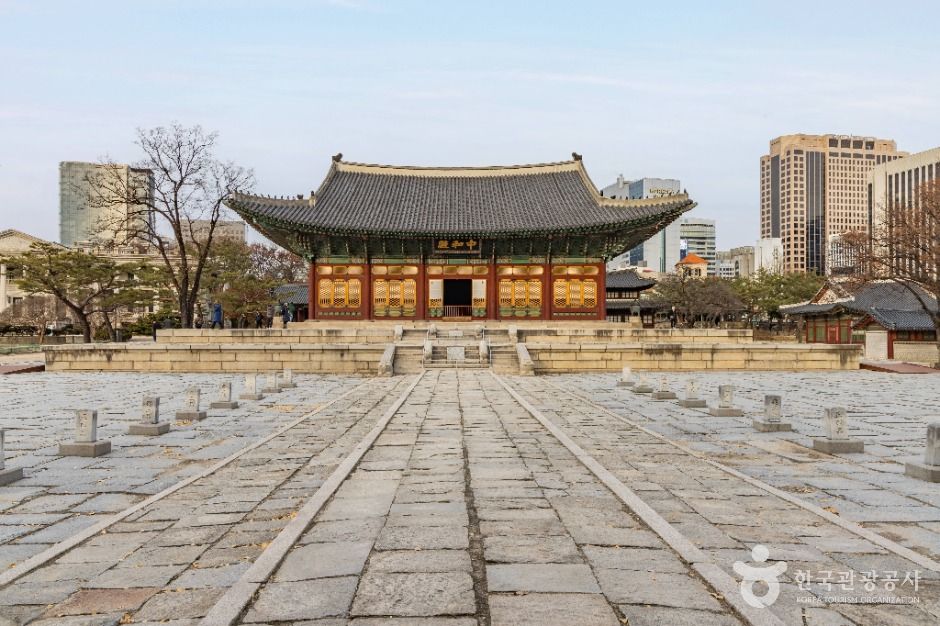
Deoksugung Palace (덕수궁)
Seoul · 99 Sejong-daero, Jung-gu, Seoul
Hours
[General admission] 09:00-21:00 (Last admission 20:00)[Exhibition] Seokjojeon Hall 09:30-17:30 (Last docent 16:30)Dondeokjeon Hall 09:00-17:30 (Last admission 17:00)Jungmyeongjeon Hall 09:30-17:30 (Last admission 17:00)
[General admission] 09:00-21:00 (Last admission 20:00)[Exhibition] Seokjojeon Hall 09:30-17:30 (Last docent 16:30)Dondeokjeon Hall 09:00-17:30 (Last admission 17:00)Jungmyeongjeon Hall 09:30-17:30 (Last admission 17:00)
Address
99 Sejong-daero, Jung-gu, Seoul
99 Sejong-daero, Jung-gu, Seoul
Parking
Not available
Not available
Overview
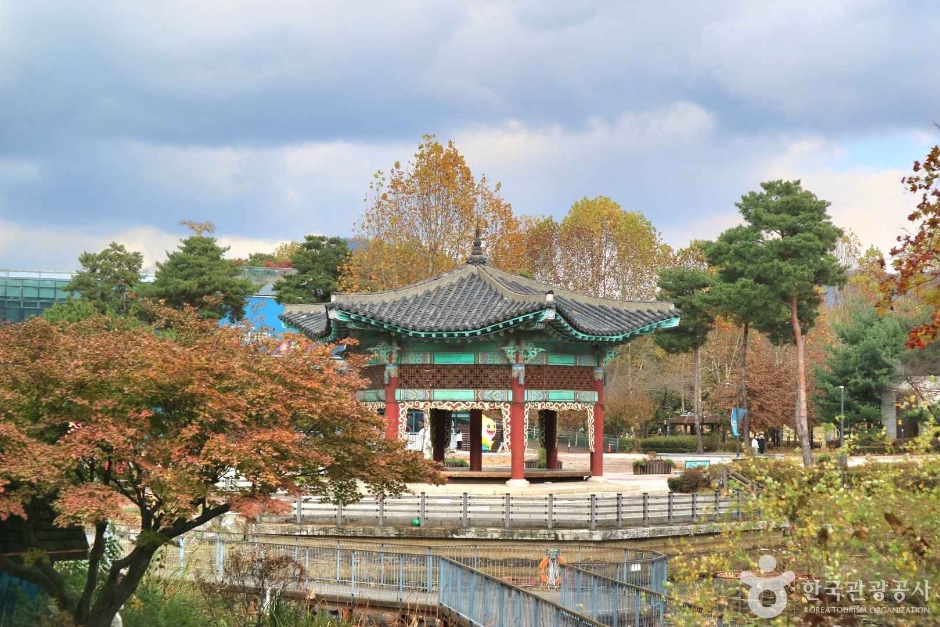
Registered as a Historic Site, Deoksugung Palace was initially not a royal palace, but the residential home of Grand Prince Wolsan (1454-1488), the older brother of King Seongjong (1469-1494) of the Joseon dynasty. It wasn't until 1593 that the palace was used as a temporary palace of the royal family after their home was burned down during the Imjin War. King Seonjo also stayed at Deoksugung Palace after returning to the city. It became a proper palace when Gwanghaegun (1575-1641) ascended to the throne and gave this royal residence the name Gyeongungung Palace in 1611. Over the following decades, the palace alternated between being an official palace and a temporary residence. The name did not change officially to Deoksugung Palace, meaning the “palace of virtuous longevity,” until 1907. While the palace once encompassed a vast area with many buildings, the current palace grounds are just a small shadow of the prior splendor, with very few structures remaining.
Location
📍 Open in Google MapsHow to Get There
Info: +82-2-771-9951
Best Time to Visit
South Korea has four distinct seasons. Spring (March–May) and autumn (September–November) are the most popular times to visit. Summer brings humidity and occasional typhoons, while winter is cold but great for ski resorts and festivals.
Frequently Asked Questions
[General admission] 09:00-21:00 (Last admission 20:00)[Exhibition] Seokjojeon Hall 09:30-17:30 (Last docent 16:30)Dondeokjeon Hall 09:00-17:30 (Last admission 17:00)Jungmyeongjeon Hall 09:30-17:30 (Last admission 17:00)
Not available
Mondays (Closed the following business day in the case of Monday being a national holiday)
+82-2-771-9951
Photos


© Korea Tourism Organization · Source required