![Petroglyphs of Bangudae Terrace in Daegok-ri [UNESCO World Heritage] (울주 대곡리 반구대 암각화 [유네스코 세계유산])](https://tong.visitkorea.or.kr/cms/resource/85/3507485_image2_1.jpg)
Petroglyphs of Bangudae Terrace in Daegok-ri [UNESCO World Heritage] (울주 대곡리 반구대 암각화 [유네스코 세계유산])
Ulsan · Daegok-ri, Eongyang-eup, Ulju-gun, Ulsan
Hours
Open 24 hr
Open 24 hr
Address
Daegok-ri, Eongyang-eup, Ulju-gun, Ulsan
Daegok-ri, Eongyang-eup, Ulju-gun, Ulsan
Overview
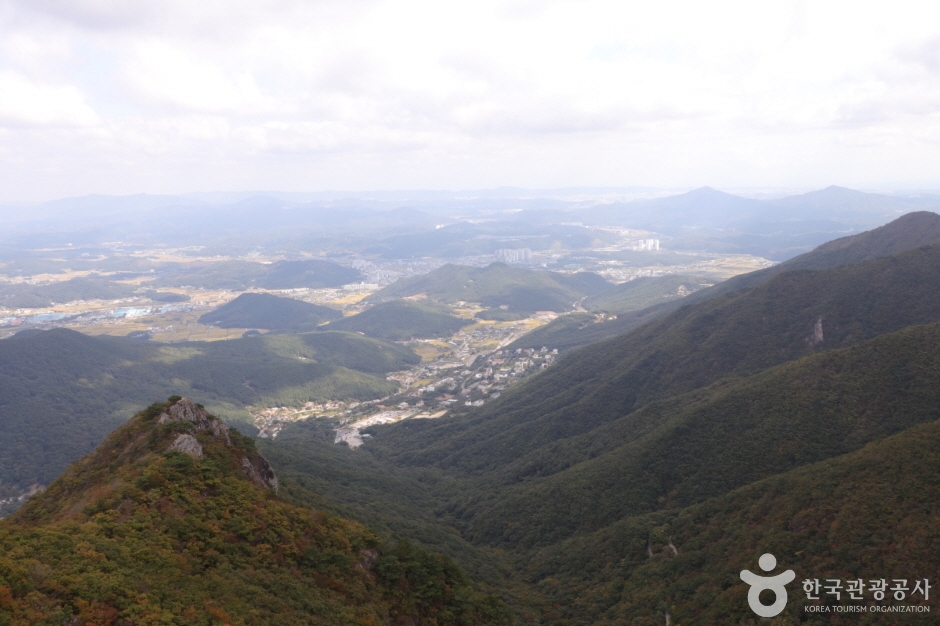
In Daegok-ri, Eonyang-eup sits Bangudae Terrace, a picturesque spot where a ridge of Yeongosan Mountain extends to and stands tall to form quite a spectacle featuring uniquely shaped rocks and cliffs. The name, Bangudae, comes from how it resembles a turtle lying prone on the ground. Petroglyphs are paintings drawn by people from the prehistoric times carved on rocks and depicting various scenes and events in their daily lives. Petroglyphs were often drawn on enormous rocks and other sacred locations of groups, and it is believed that people gathered around them to hold various rituals.
Petroglyphs of Bangudae Terrace in Daegok-ri, Ulju-gun are estimated to have been drawn over several periods since the New Stone Age, and visitors can observe the differences in styles among various ages. Primary objects that were popularly carved include sea animals, land animals, humans and tools and, as the prehistoric ancestors actively engaged in hunting, the hope of abundance in game is believed to be the reason why these objects were frequently carved on rocks. Vividly expressing animals and hunting scenes and colorfully depicting outstanding traits of objects, these petroglyphs are a form of both hunting art and religious art, and they are considered as the greatest masterpieces that give a peek at the life and customs of the prehistoric ages. The petroglyphs on the Bangudae Terrace and the petroglyphs in Cheonjeon-ri, spanning three kilometers altogether along the Bangucheon Stream, have been inscribed on the UNESCO World Heritage List on July 12, 2025.
Petroglyphs of Bangudae Terrace in Daegok-ri, Ulju-gun are estimated to have been drawn over several periods since the New Stone Age, and visitors can observe the differences in styles among various ages. Primary objects that were popularly carved include sea animals, land animals, humans and tools and, as the prehistoric ancestors actively engaged in hunting, the hope of abundance in game is believed to be the reason why these objects were frequently carved on rocks. Vividly expressing animals and hunting scenes and colorfully depicting outstanding traits of objects, these petroglyphs are a form of both hunting art and religious art, and they are considered as the greatest masterpieces that give a peek at the life and customs of the prehistoric ages. The petroglyphs on the Bangudae Terrace and the petroglyphs in Cheonjeon-ri, spanning three kilometers altogether along the Bangucheon Stream, have been inscribed on the UNESCO World Heritage List on July 12, 2025.
Location
📍 Open in Google MapsHow to Get There
Info: +82-52-229-6678
Best Time to Visit
South Korea has four distinct seasons. Spring (March–May) and autumn (September–November) are the most popular times to visit. Summer brings humidity and occasional typhoons, while winter is cold but great for ski resorts and festivals.
Frequently Asked Questions
Open 24 hr
N/A (Open all year round)
+82-52-229-6678
Photos


© Korea Tourism Organization · Source required · No modifications